


|
|
|
|
|

|
|
|
|
Sign up for our free newsletter to get training tips and stay up to date on Catalyst Athletics, and get a FREE issue of the Performance Menu journal.
|
|
|
 |
|
11-30-2008, 03:46 PM
|
#2
|
|
Senior Member
Join Date: Sep 2008
Location: Northern VA
Posts: 904
|
I've had this question for a while and this seems like the perfect time to ask..
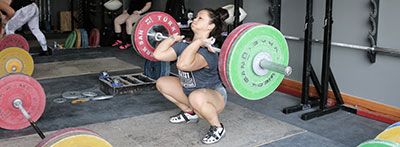
During the part of that sequence where he is in the ohs position, his knees are not tracking over his toes and are pulled pretty far to the inside. I've seen this in a lot of the top lifters (olympic caliber) but according to everything i've heard or read, the toes are supposed to track over the toes in every squat...is this wrong?
And if his knees are supposed to be tracking over his toes, yet they are not, can someone explain how he, and other oly lifters, can still lift so much without getting hurt without proper form?
|
|
|
11-30-2008, 04:13 PM
|
#3
|
|
Senior Member
Join Date: Nov 2006
Location: Deland, FL
Posts: 4,232
|
Man that is just absolutely amazing.
__________________
What we think, or what we know, or what we believe, is in the end, of little consequence. The only thing of consequence is what we do. -John Ruskin
http://westvolusiawellness.com/
|
|
|
11-30-2008, 05:18 PM
|
#4
|
|
Administrator
Join Date: Oct 2006
Posts: 1,609
|
Chris -
It simply allows a deeper receiving position - the hips can drop beween the legs.
Some of them do get hurt - not a huge number, but it's not unheard of. What you see more often is chronic problems - constant pain, inflammation, etc. There are a lot of lifters at that level who have had multiple surgeries. Last year at the olympic training center, natalie woolfolk was the only resident female who had never had surgery (and now it looks like she needs it on her shoulder). So while you don't necessarily see acute injuries often, you can never predict when you will get one, and you can pretty much count on long term problems.
That said, it's the opinion of some smart people (tommy kono for instance) that training like that will develop connective tissue elasticity and strength, which will prevent injury. Hard to say.
|
|
|
11-30-2008, 05:41 PM
|
#5
|
|
Senior Member
Join Date: Sep 2008
Location: Northern VA
Posts: 904
|
Quote:
Originally Posted by Greg Everett
What you see more often is chronic problems - constant pain, inflammation, etc. There are a lot of lifters at that level who have had multiple surgeries.
...
So while you don't necessarily see acute injuries often, you can never predict when you will get one, and you can pretty much count on long term problems.
|
So your saying that everyone involved in only lifting will encounter long term problems, or just olympic caliber athletes?
Because to me that sounds like a reason to not get into oly lifting...dont get me wrong, I love oly lifting even though i've been doing it for such a short time, but personally I dont want to live the rest of my life with nagging injuries.
|
|
|
11-30-2008, 05:47 PM
|
#6
|
|
Administrator
Join Date: Oct 2006
Posts: 1,609
|
I'm saying those who do what you posted about - squatting with a stance that misaligns the knees - will likely find themselves with knee problems in the long run.
|
|
|
11-30-2008, 06:39 PM
|
#7
|
|
Senior Member
Join Date: Sep 2008
Location: Northern VA
Posts: 904
|
Ok thanks for the clarification. I'll be paying more attention to my knees now, and sorry for kinda hijacking the thread.
|
|
|
12-01-2008, 06:12 AM
|
#8
|
|
Senior Member
Join Date: Oct 2006
Location: Charleston, SC
Posts: 4,244
|
That is a great series of pictures.
__________________
"And for crying out loud. Don't go into the pain cave. I can't stress this enough. Your Totem Animal won't be in there to help you. You'll be on your own. The Pain Cave is for cowards.
Pain is your companion, don't go hide from it."
-Kelly Starrett
|
|
|
12-01-2008, 07:00 AM
|
#9
|
|
Member
Join Date: May 2008
Posts: 79
|
What I find interesting about this sequence...is how upright his torso stays off the floor and into the transition. I'm used to seeing videos (including elite lifters) who hinge heavily at/around the knees, where that vertical torso almost lays out horizontally when the hips shoot up. I guess that would mean Steiner's quads are really strong to hold that position (it appears to me that he is basically 'squatting' it up)?
Disregarding the posts above about the squat/knee tracking....Greg, would you consider this an ideal to aim for...holding the torso that vertical specifically through the first pull and into the scoop?
|
|
|
12-01-2008, 08:06 AM
|
#10
|
|
Senior Member
Join Date: Nov 2008
Posts: 338
|
Thanks. I have been looking for a picture like that to put in my garage gym.
|
|
|
| Thread Tools |
|
|
| Display Modes |
Linear Mode
|
Posting Rules
|
You may not post new threads
You may not post replies
You may not post attachments
You may not edit your posts
HTML code is Off
|
|
|
|
All times are GMT -7. The time now is 09:30 AM.
|
|
Submit your question to be answered by Greg or Aimee Everett in the Performance Menu or on the website
Submit Your Question
|
Catalyst Athletics is a USA Weightlifting team of competitive Olympic-style weightlifters. We are currently recruting new lifters and offer sponsorship opportunities.
Read More
|
|
|
|
|
|
|
All content © Catalyst Athletics, Inc. | 1257 Tasman Drive Suite A | Sunnyvale, CA 94089 | 408-400-0067 | Site Terms & Conditions
|
|
|

|