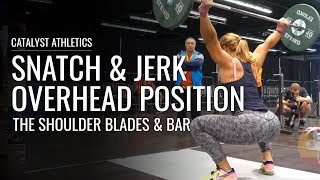



Internal or External Rotation Overhead in the Snatch?
Should your arms be externally rotated overhead in the snatch? Or internally rotated? Neither one, really.
Let me explain.
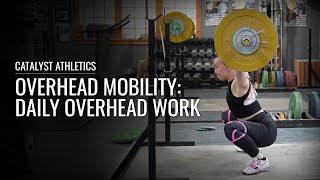
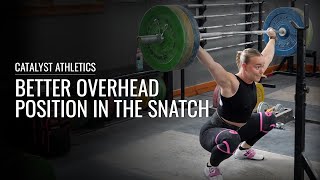
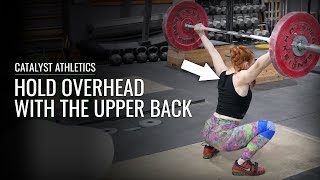
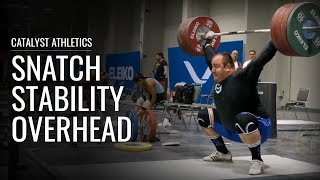
Here are some examples of elite lifters overhead. Note the orientation of the elbow—within a pretty small range, it’s pointed about halfway between down and back.
Now here is maximal internal rotation—the elbow is pointed back.
And here is maximal external rotation—the elbow is pointed down.
So when we consider the overhead position in terms of end ranges, neither one of these is common practice.
However, two things can make the optimal position FEEL like maximal internal rotation—limitations of shoulder mobility, and limitations of the arm’s ability to rotate while gripping a barbell.
The problem is that neither of these things is consistent among athletes, meaning describing the position as maximal internal rotation is problematic because it will produce different positions for different lifters.
The other problem is that often in the attempt to achieve maximal internal rotation, athletes will roll their shoulders forward into a weak, unstable position rather than keeping the shoulder blades fixed properly.
I prefer describing the ideal position of the arm as one that orients the bony point of the elbow approximately halfway between straight down and straight back.
The priority overhead is fixing the shoulder blades in a way that allows the arms to move freely into the overhead position while creating maximal stability. True end range rotation either way forces the shoulder blades out of this position and reduces stability.
Spend some time trying slight variations of rotation while ensuring proper scapular position and find what creates the most stability for you.
Another reason this gets confusing is that you can be internally rotated relative to neutral without being in end range IR, which are two very different positions, but one may refer to the former as internal rotation, which is at best ambiguous.
We also have a large demographic who is more externally rotated either because of poor mobility or instruction, so we want them to internally rotate relative to that starting point. But if someone already in a good position is told the same thing, we end up with excessive internal rotation.
The solution to me is to stop using this terminology to describe and teach the position, and instead use a description that’s much simpler, applies universally to all athletes and is verifiable by observers, whether coaches or athletes analyzing their own lifts.
And yes, you can find a couple elite lifters who do odd things like externally rotate—this is just more evidence of the absence of One True Way.
Ultimately each of you has to use what works best for you, and in some cases, that’s going to be a suboptimal position due to whatever limitations you have, from poor mobility to anatomical peculiarities to injury history. But it’s important to understand what we’d prefer so you can get as close as you’re able.
Find what provides YOU the strongest, most stable, and safest overhead position.
Let me explain.
Here are some examples of elite lifters overhead. Note the orientation of the elbow—within a pretty small range, it’s pointed about halfway between down and back.
Now here is maximal internal rotation—the elbow is pointed back.
And here is maximal external rotation—the elbow is pointed down.
So when we consider the overhead position in terms of end ranges, neither one of these is common practice.
However, two things can make the optimal position FEEL like maximal internal rotation—limitations of shoulder mobility, and limitations of the arm’s ability to rotate while gripping a barbell.
The problem is that neither of these things is consistent among athletes, meaning describing the position as maximal internal rotation is problematic because it will produce different positions for different lifters.
The other problem is that often in the attempt to achieve maximal internal rotation, athletes will roll their shoulders forward into a weak, unstable position rather than keeping the shoulder blades fixed properly.
I prefer describing the ideal position of the arm as one that orients the bony point of the elbow approximately halfway between straight down and straight back.
The priority overhead is fixing the shoulder blades in a way that allows the arms to move freely into the overhead position while creating maximal stability. True end range rotation either way forces the shoulder blades out of this position and reduces stability.
Spend some time trying slight variations of rotation while ensuring proper scapular position and find what creates the most stability for you.
Another reason this gets confusing is that you can be internally rotated relative to neutral without being in end range IR, which are two very different positions, but one may refer to the former as internal rotation, which is at best ambiguous.
We also have a large demographic who is more externally rotated either because of poor mobility or instruction, so we want them to internally rotate relative to that starting point. But if someone already in a good position is told the same thing, we end up with excessive internal rotation.
The solution to me is to stop using this terminology to describe and teach the position, and instead use a description that’s much simpler, applies universally to all athletes and is verifiable by observers, whether coaches or athletes analyzing their own lifts.
And yes, you can find a couple elite lifters who do odd things like externally rotate—this is just more evidence of the absence of One True Way.
Ultimately each of you has to use what works best for you, and in some cases, that’s going to be a suboptimal position due to whatever limitations you have, from poor mobility to anatomical peculiarities to injury history. But it’s important to understand what we’d prefer so you can get as close as you’re able.
Find what provides YOU the strongest, most stable, and safest overhead position.